Choose a specific job for the board
A collection mood board can guide silhouette, colors and the customer moment. A campaign mood board can guide setting, lighting and image language. Decide which job you need before gathering references.
For a first campaign, write one sentence about the intended feeling and one sentence about the practical use. A board for evening launch posts needs different decisions from a clear product listing.
Select references with distinct contributions
Choose each reference for a reason. One might explain the architecture, another the camera height and another the quality of light. Record that reason beside the image. This prevents a large board from becoming a vague instruction to copy everything.
Use references you have permission to share or generate your own studies. Keep the source and any usage limits with the board. A generated inspiration frame should be labeled as such.
Extract the visible ingredients
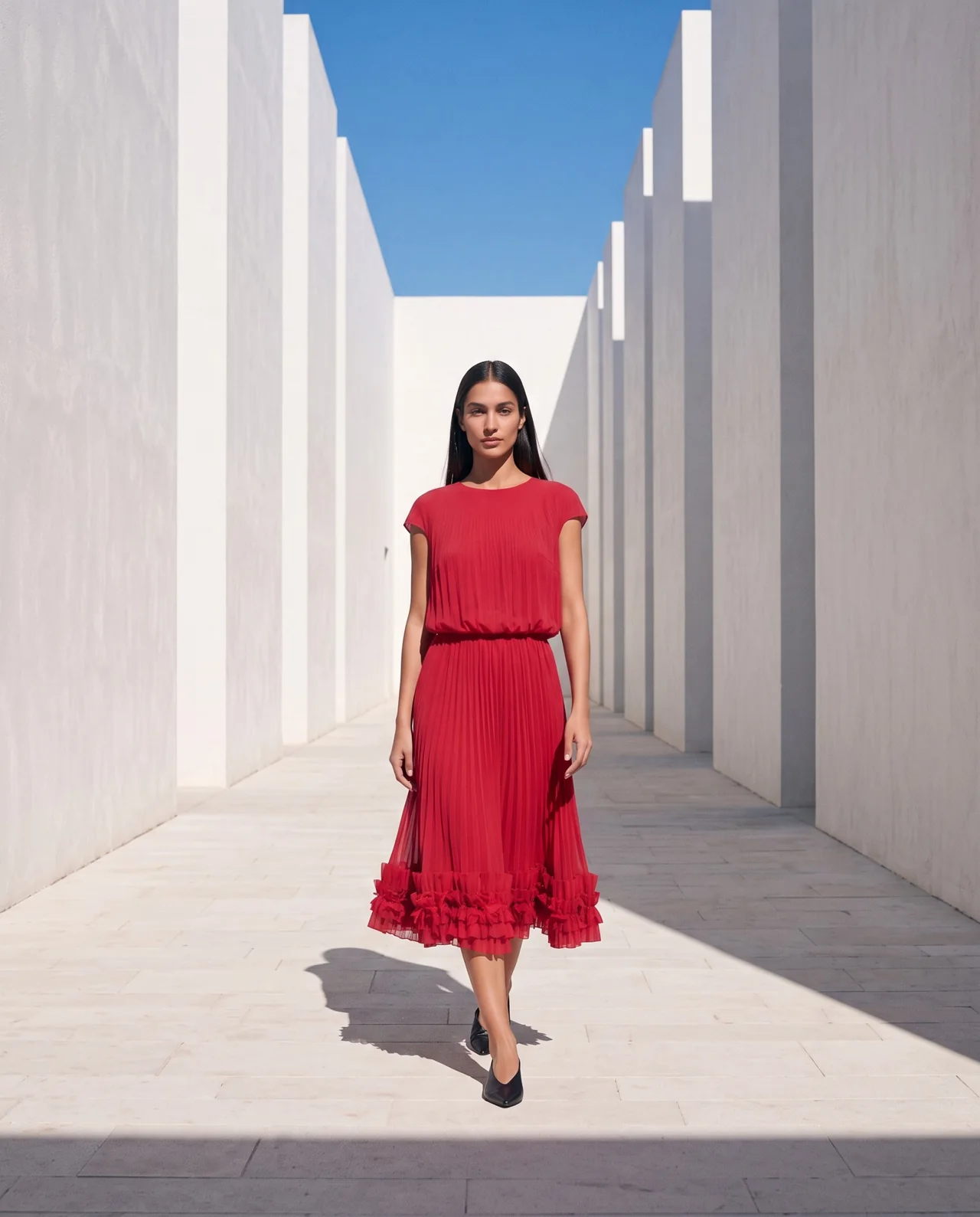
Write observations a person could point to in the reference. For example: white walls, open shade, full-body framing, a forward walk and space behind the model. These are more useful than a long list of abstract mood words.
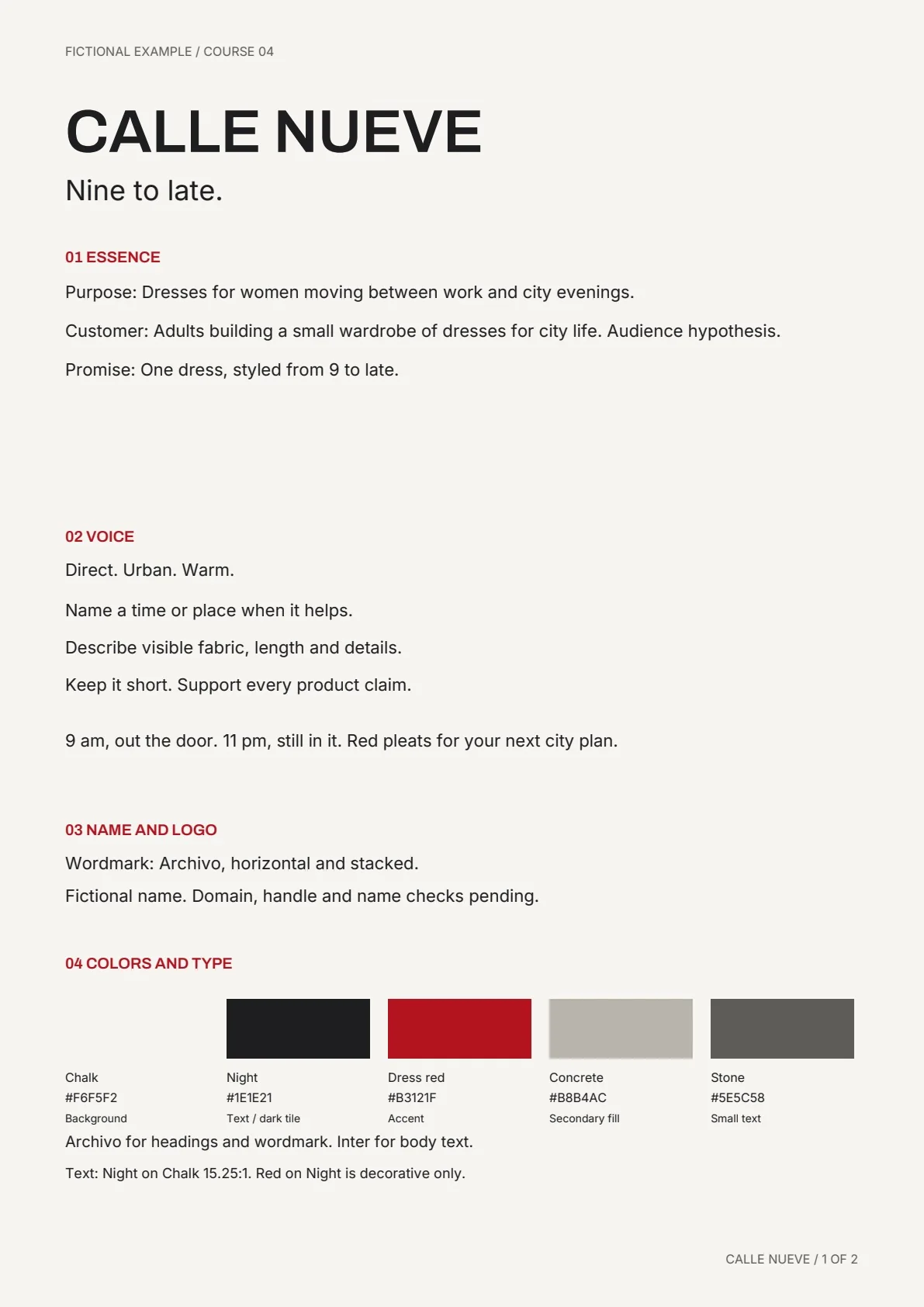
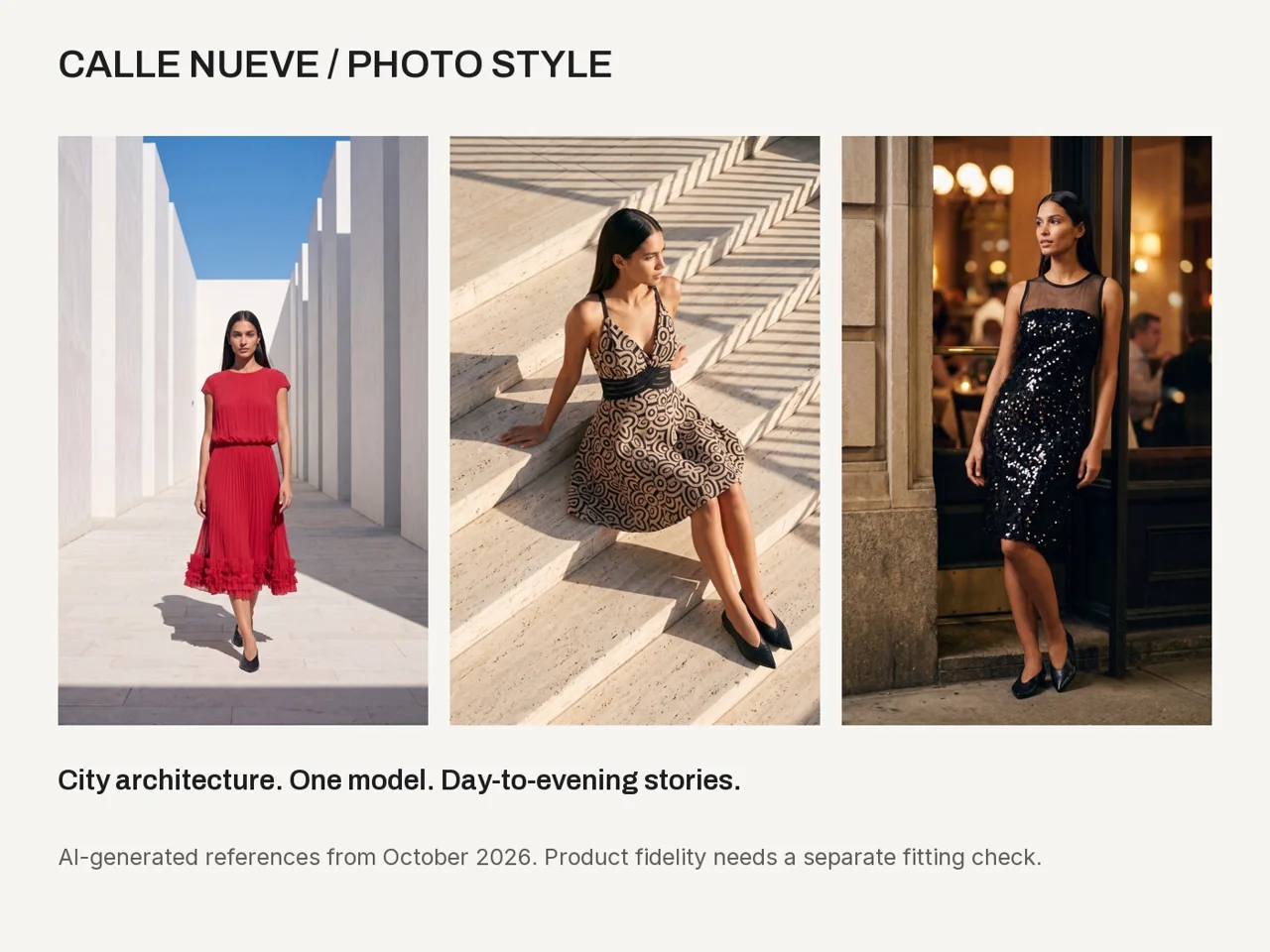
The course uses a daytime passage, city steps and an evening doorway to support one collection story. The scenes vary while the project keeps a clear customer moment and model direction.
| Board observation | Instruction for a brief |
|---|---|
| Long architectural passage | Keep visible depth behind the model |
| Full-body frame | Include head, shoes and the complete garment |
| Quiet daylight | Describe soft, even light and stable color |
| Restrained movement | Request one clear action with room to perform it |
Combine the board with garment evidence
Send both the creative board and the real garment references. Explain which one controls the mood and which one controls the product. A reference for a pose should not silently become a reference for another dress.
Our red-dress source is a back view. The mood board does not fill that gap. Front details still require front evidence, even when the chosen atmosphere is very clear.
Help me turn this mood board into a fashion shot brief. For each reference, state the one feature we will use: setting, light, camera, pose or color mood. Keep the actual garment references as the source for clothing details. List fixed choices, optional choices and unknown product information. Propose one first scene for [intended use].
Test the board in one frame
Generate or assemble one test using the agreed direction. Compare the output with the written decisions. Check whether the space, light, framing and garment read as intended. Keep the test and note the next change.
If every detail changes at once, the next comparison becomes harder. Name one mismatch and correct it before expanding the campaign. A small test can reveal that the mood needs a clearer brief.
Keep a compact handoff
Save the selected references, source credits, observations and approved scene brief in the brand or campaign folder. Include one rejected direction if it explains an important choice.
When you move to video, revisit the board for space and camera behavior. A still scene may not leave room for a step or a turn. Add a motion card so the intended movement is explicit.
Questions before you start
How many images should I use?
Use enough to explain the decisions. A small set with clear roles is easier to direct than a large board with conflicting references.
Can AI generate the whole mood board?
It can help explore directions. Review the results and keep a written explanation of what you actually choose.
Examples and sources
Adapted from the photo-style references in Build Your Brand Identity and the scene brief in Create Your Campaign.
Written by Fashion AI Skool using its course materials and practice records. Updated October 20, 2026. Generated examples demonstrate a process; they do not certify unseen product details.