Choose your collection route
If you already have garments, build the plan from the pieces you actually own. If you are exploring a new collection, label the work as a design concept. This distinction affects what you can claim about fabric, construction and fit.
Start with a manageable group. The course suggests one to eight real pieces, or a balanced plan of four to eight concept pieces. A smaller coherent drop gives you room to check decisions before expanding.
Write a three-line collection story
Describe the collection name, release window or season, mood and customer moment. Keep it short enough to guide a choice. Compare the story with your brand file and the actual pieces.
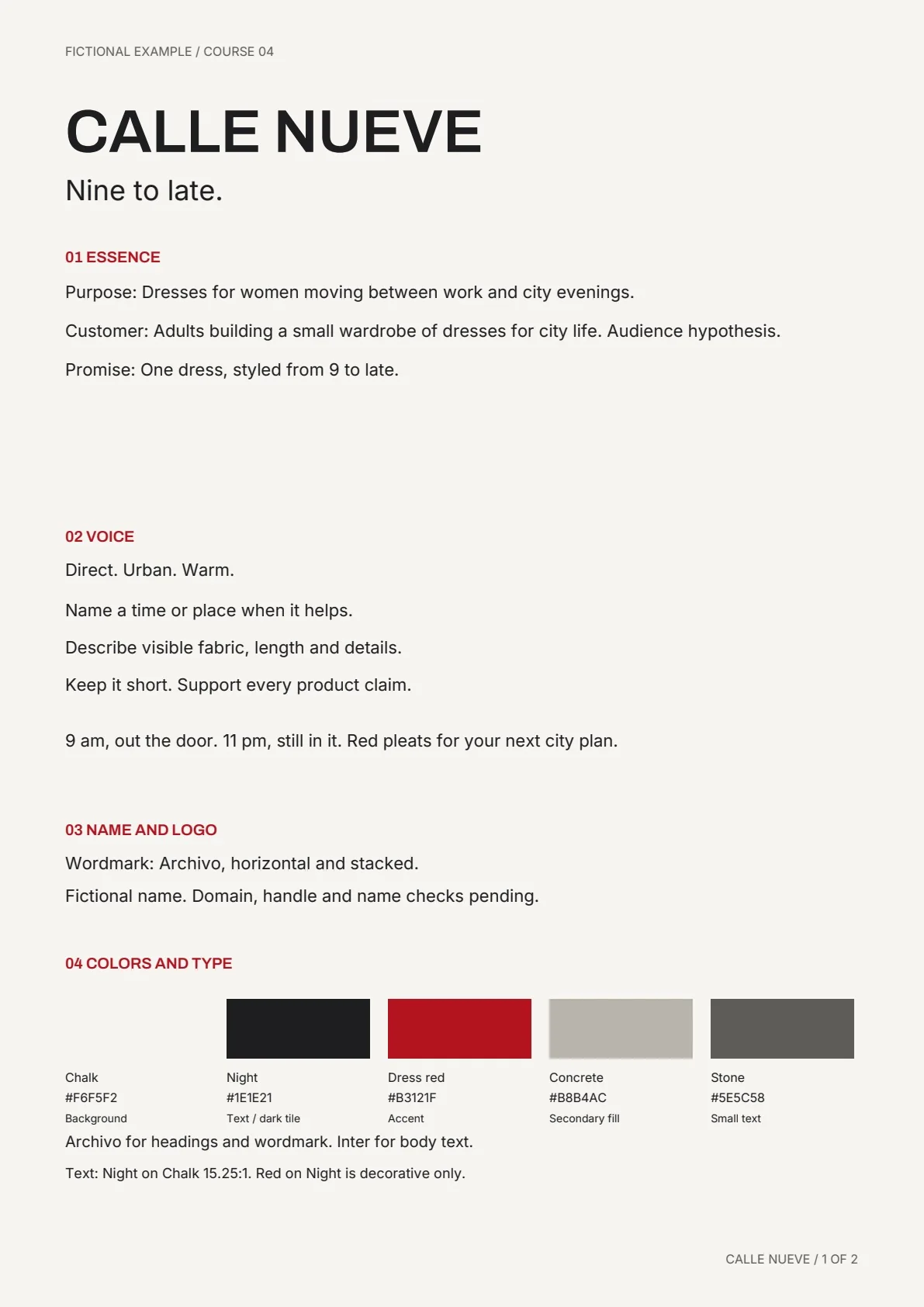
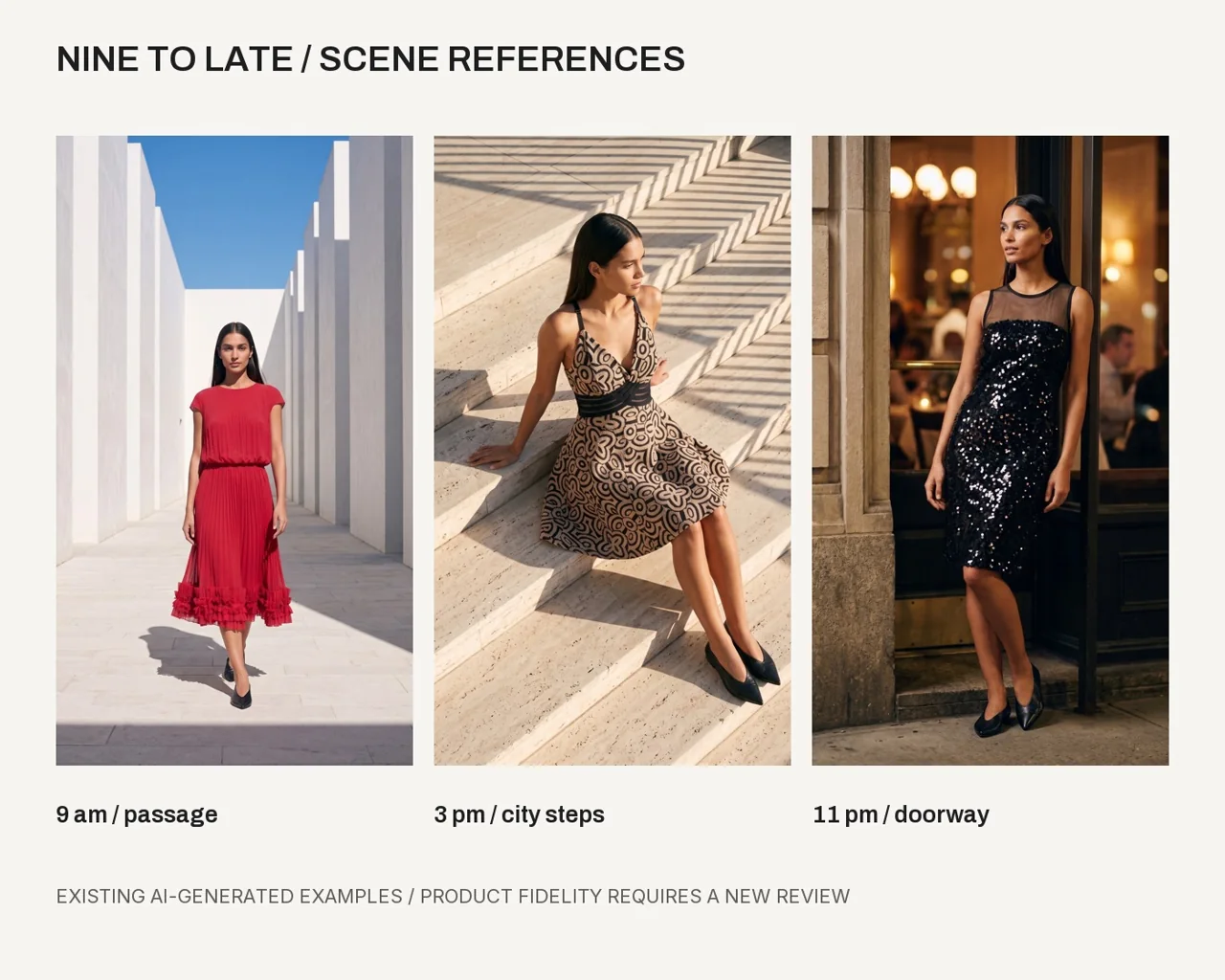
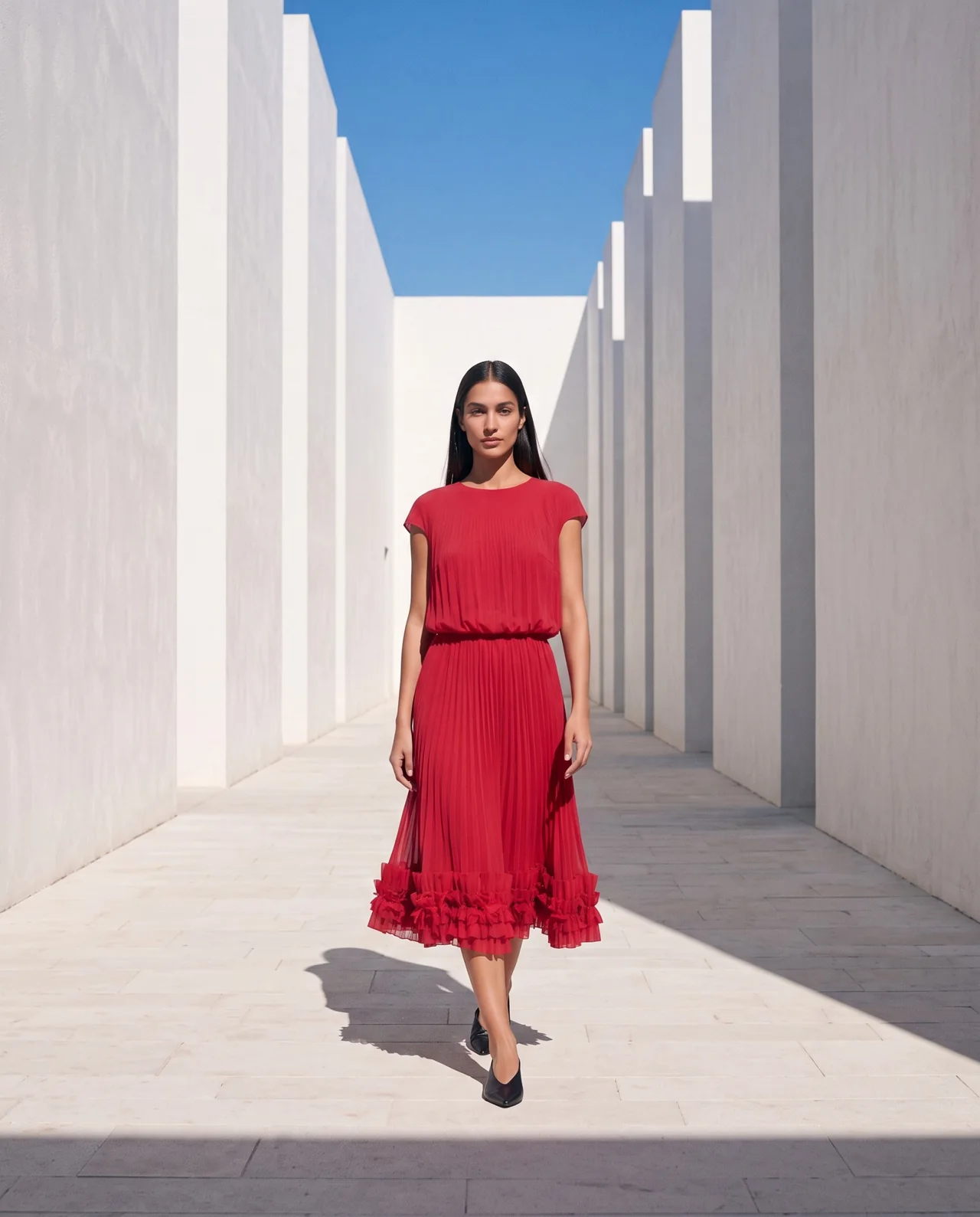
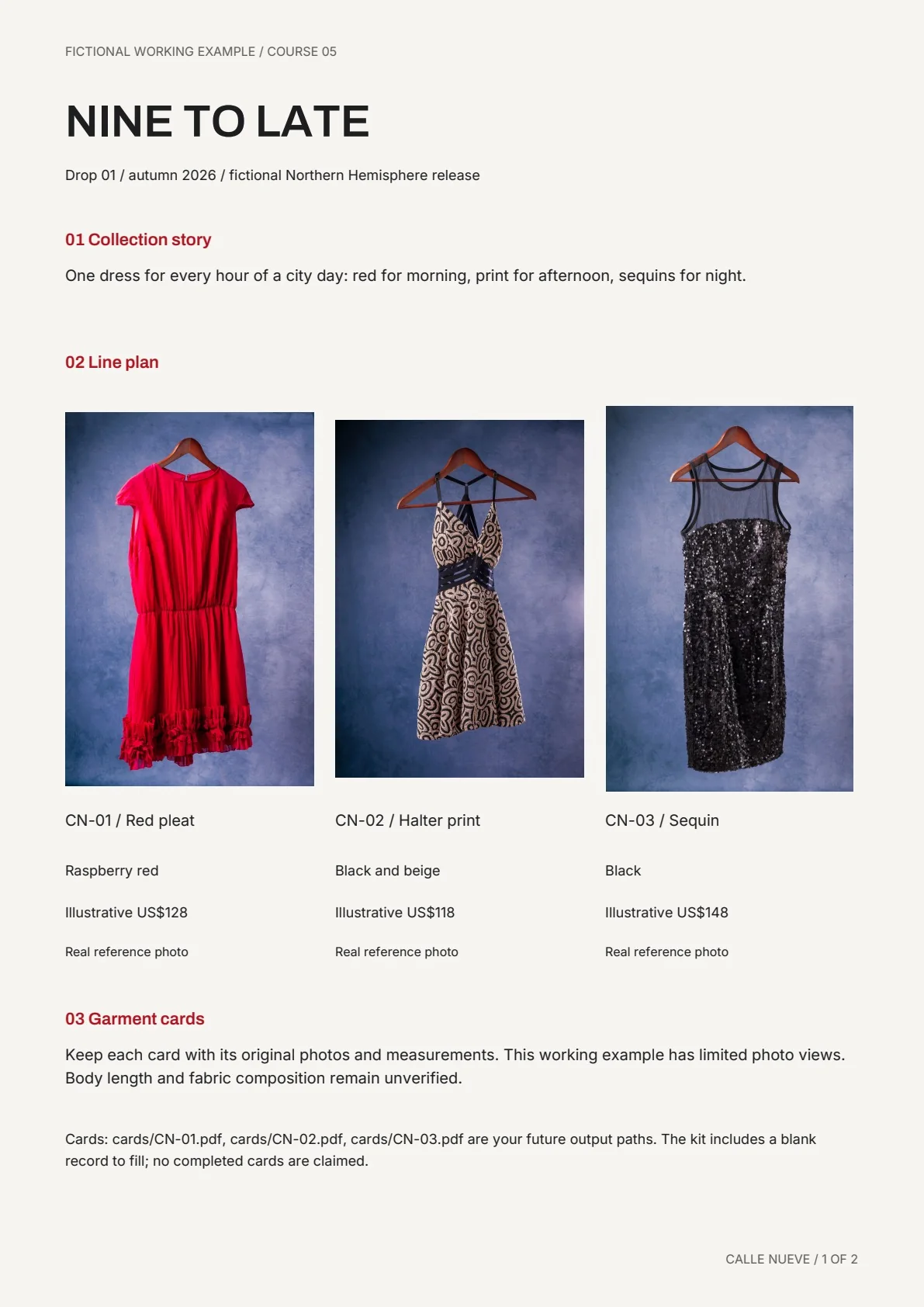
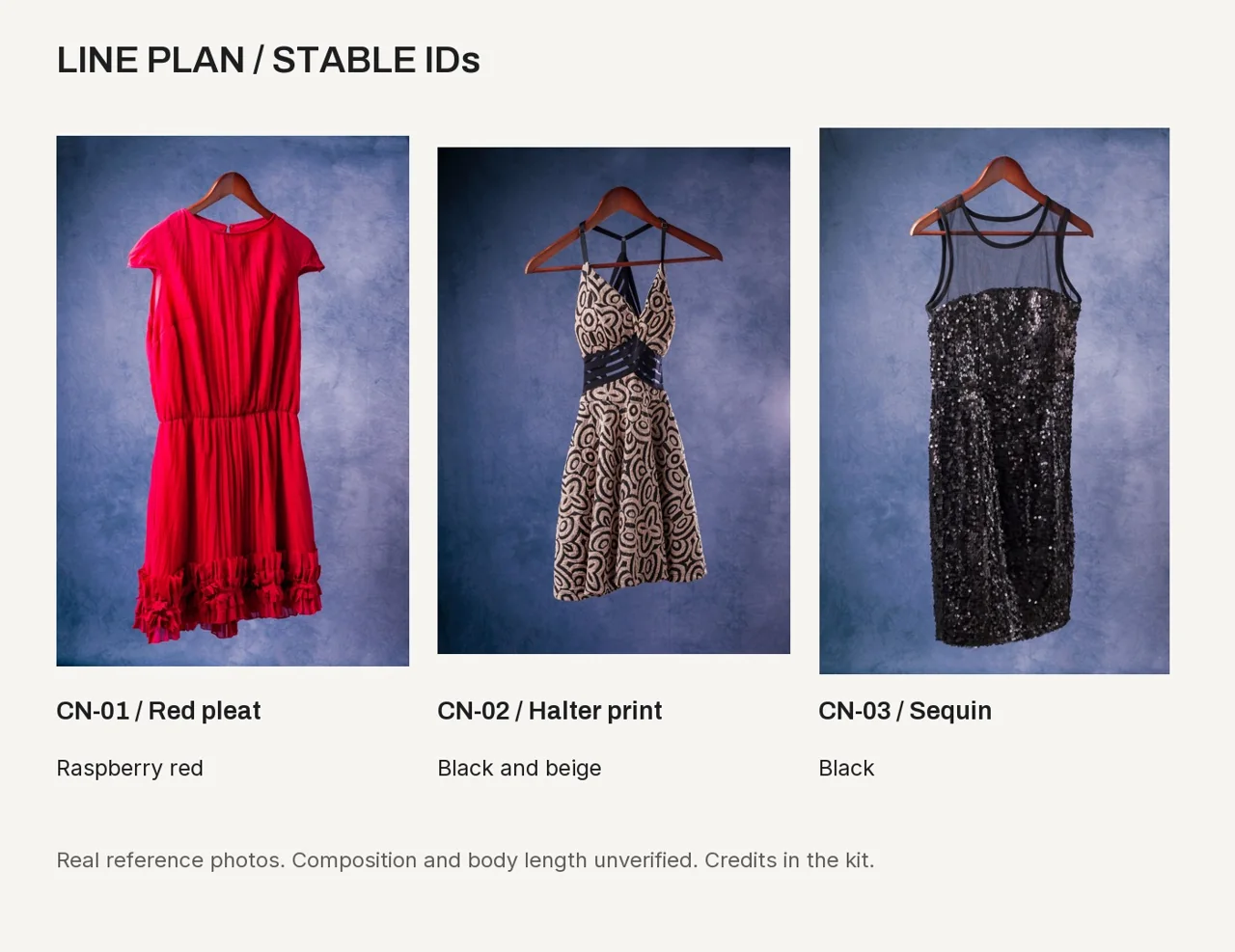
The worked example is Nine to Late. Red pleats, a black-and-beige print and black sequins support a city mood from morning to night. The story connects the garments without claiming that they share unverified fabric composition.
Build a line plan with stable IDs
Assign an ID to each piece and retain it when the display name changes. In the example, CN-01 is the red pleated dress, CN-02 the halter print and CN-03 the sequin piece. Reference filenames stay connected to those IDs.
For each row, record the garment name, color, visible features, source photos and status. Keep illustrative prices separate from actual prices. Record unavailable information as unknown.
| Field | What to record |
|---|---|
| ID | A stable code such as CN-01 |
| Source | Front, back and detail filenames |
| Evidence | Visible features and confirmed information |
| Unknowns | Missing measurements, composition or hidden construction |
| Role | Why this piece belongs in the collection |
Make garment cards before generating scenes
A garment card gives the agent a small, reusable brief for one product. Include visible shape, intended use and the source references. Distinguish a visual estimate from information you confirmed on the item.
For a design concept, a convincing render remains a concept. Technical specifications, pattern making, sampling and physical fit require their own work. Do not turn a generated image into a claim that a garment is production ready.
Help me organize [existing garments / new design concepts] into a small collection. Use my brand direction and these references. Propose three short collection stories, then a line plan with stable IDs, source files, confirmed features, unknowns and each piece’s role. Keep concepts separate from real garments. Wait for my choice before expanding the plan.
Plan looks and identify gaps
Give each look a purpose in the collection. Check whether it repeats the same role or adds a useful contrast. A missing piece should have a clear job before you request design options.
When choosing among options, compare them against the story, customer and available evidence. Keep a short reason for the selection. The course uses a “How we chose” board so the final choice has context.
Prepare the campaign handoff
Save the approved story, line plan, garment cards, look plan and outstanding questions together. Link the brand file and model anchor. The campaign can then use a coherent plan rather than reconstructing product details.
Before photographing or generating, check that the source set covers the views needed for each scene. A back-only reference creates a visible gap if the campaign needs a front hero shot.
Questions before you start
Can AI design a sellable collection from a prompt?
It can help explore and organize concepts. Physical product development, technical specifications and fit still need appropriate evidence and work.
Can I use a collection I already sell?
Yes. Build the line plan from your real products and connect each ID to its actual references and verified information.
Examples and sources
Adapted from Create Your Collection and its Nine to Late collection story, line plan and garment cards.
- See the Fashion AI Skool learning path
- Practice garment photographs: Marcelo Verfe on Pexels
- Halter reference photograph
- Sequin reference photograph
Written by Fashion AI Skool using its course materials and practice records. Updated October 20, 2026. Generated examples demonstrate a process; they do not certify unseen product details.